
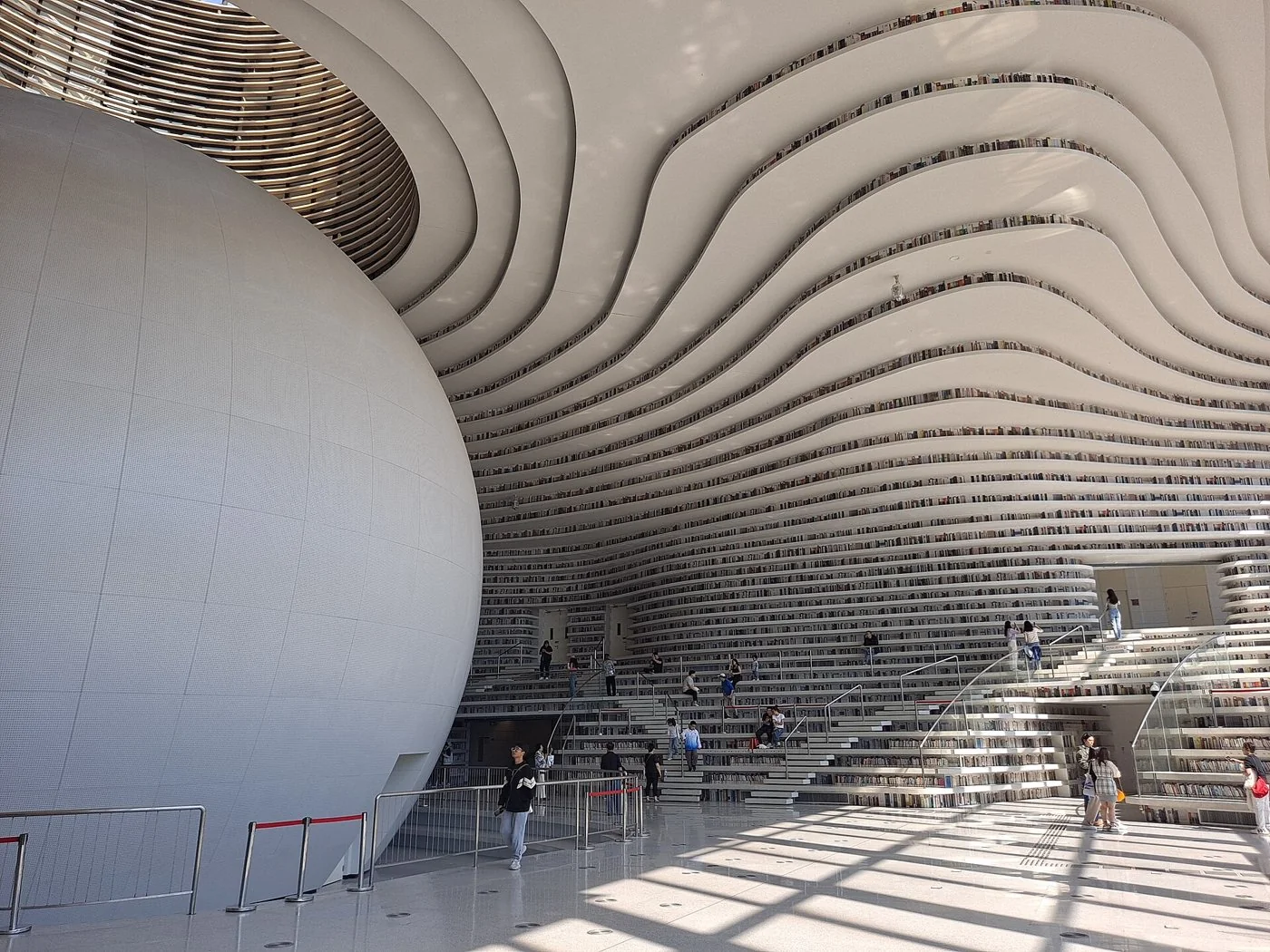
Tianjin · China
GAD / PROJECT FILEMusashino Art University LibraryKodaira · 2010Project reference · photography at source
Bookshelves become the spatial framework of a university library.
The project, in context
Sou Fujimoto organised the library around the idea of an extensive landscape of bookshelves. Openings and routes interrupt that order, balancing legible organisation with the possibility of wandering and discovery. The new library building was completed in spring 2010.
What to look for
- 01
Bookshelves as architecture
- 02
Multiple reading routes
- 03
New library completed in 2010
Read this project in context
CONTINUE EXPLORING
Related works
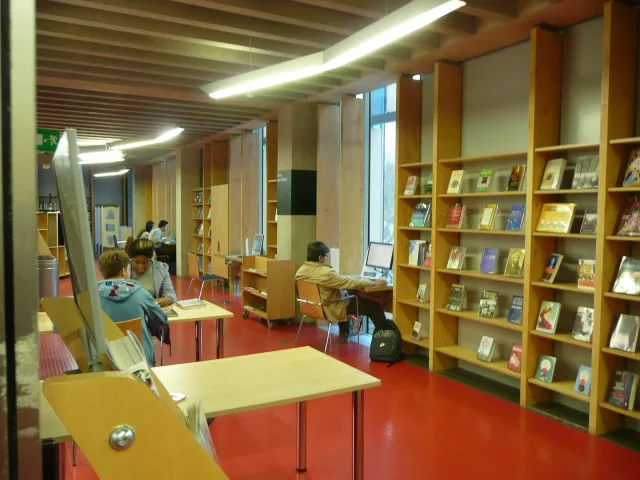
London · United Kingdom
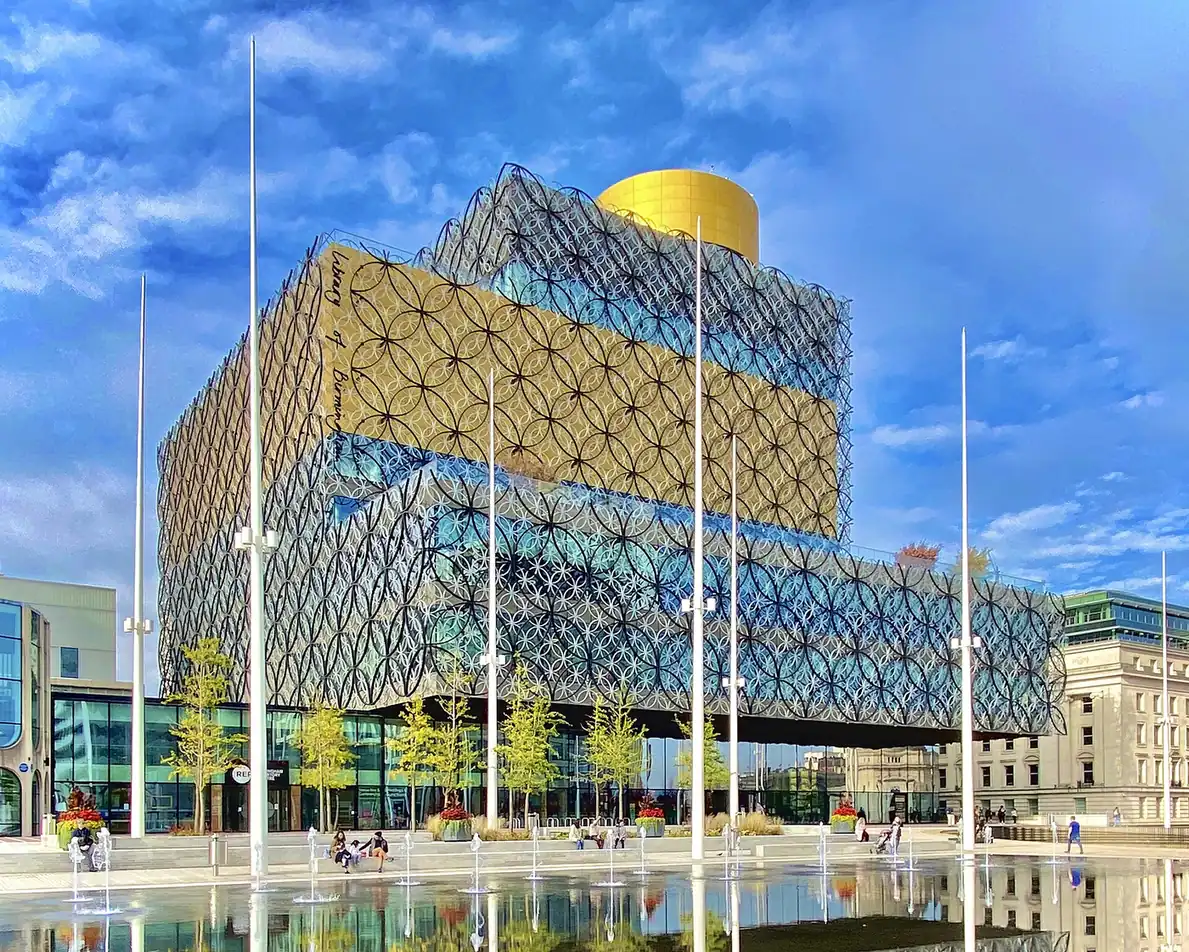
Birmingham · United Kingdom
GAD / DESIGN STUDY
Musashino Art University Library: Finding a Book in a Spiral
English study · Chinese summary · · Study dated 2026-10-08
Musashino Art University Library makes the bookcase do work normally assigned to a wall. Designed by Sou Fujimoto and completed in March 2010 at the university’s Kodaira campus, its spatial identity comes from shelving arranged as a spiral. The adjacent museum’s renovation followed in June 2011; it should not be collapsed into the completion date of the new library. Together they belong to an institution whose collections connect learning, research and exhibition. University account.
Fujimoto’s architectural explanations, published by the library, focus on continuous shelving, the spiral arrangement, signage, skylights and views through openings. Those subjects reveal a productive tension. A library needs an orderly system for finding a specific item, but it can also encourage a reader to encounter something unplanned. The spiral gives the collection a strong overall form while the openings keep movement from being confined to a single continuous track. Architect’s design explanations.
The significance of the bookcase is therefore partly spatial. A tall shelf establishes an edge and a sense of enclosure; a gap through it can frame another area and suggest a route. The same element can hold material, guide movement and mark a change in scale. This makes furniture integral to the architectural reading of the building rather than a secondary layer placed within an otherwise complete room.
The operating collection is more differentiated than the image of an endless wall of books might suggest. The library’s guide places exhibition catalogues, picture books and current magazines on the first floor, with specialist art, design and architecture books above. Older material, special collections and periodical back issues occupy basement storage, including compact shelving. The building accommodates distinct modes of access rather than putting the entire collection into one visually uniform browsing environment. Library guide.
That distinction matters when evaluating the design. A person searching for a known title needs dependable classification and a clear relationship between catalogue information and physical location. Someone developing a research topic may benefit from seeing related material along the way. A convincing library supports both behaviours. Spatial complexity becomes useful when it offers choices without making basic retrieval unnecessarily difficult; the prominence of signage in Fujimoto’s own explanation acknowledges that requirement.
Daylight and external views provide another order alongside the shelves. Openings can locate a reader in relation to the campus, while light from above can make the depth of the interior legible. These cues are especially valuable in a layout whose repeated components might otherwise make different places resemble one another. Their contribution is not only atmospheric. They help turn a continuous field into a sequence of recognisable settings.
Musashino’s lesson is that a strong architectural concept does not replace the ordinary intelligence of a library. Storage, classification, reading and movement retain different needs. Fujimoto gives them a shared spatial language while allowing routes and collections to remain differentiated. The spiral is most interesting as a framework for those encounters, rather than as a shape to be admired independently of the books and people that make it work.