
Shanghai · China
 View larger
Photographs
Open a view to study it at a larger size.
Offices, hotel and public observation within a supertall tower.
The project, in context
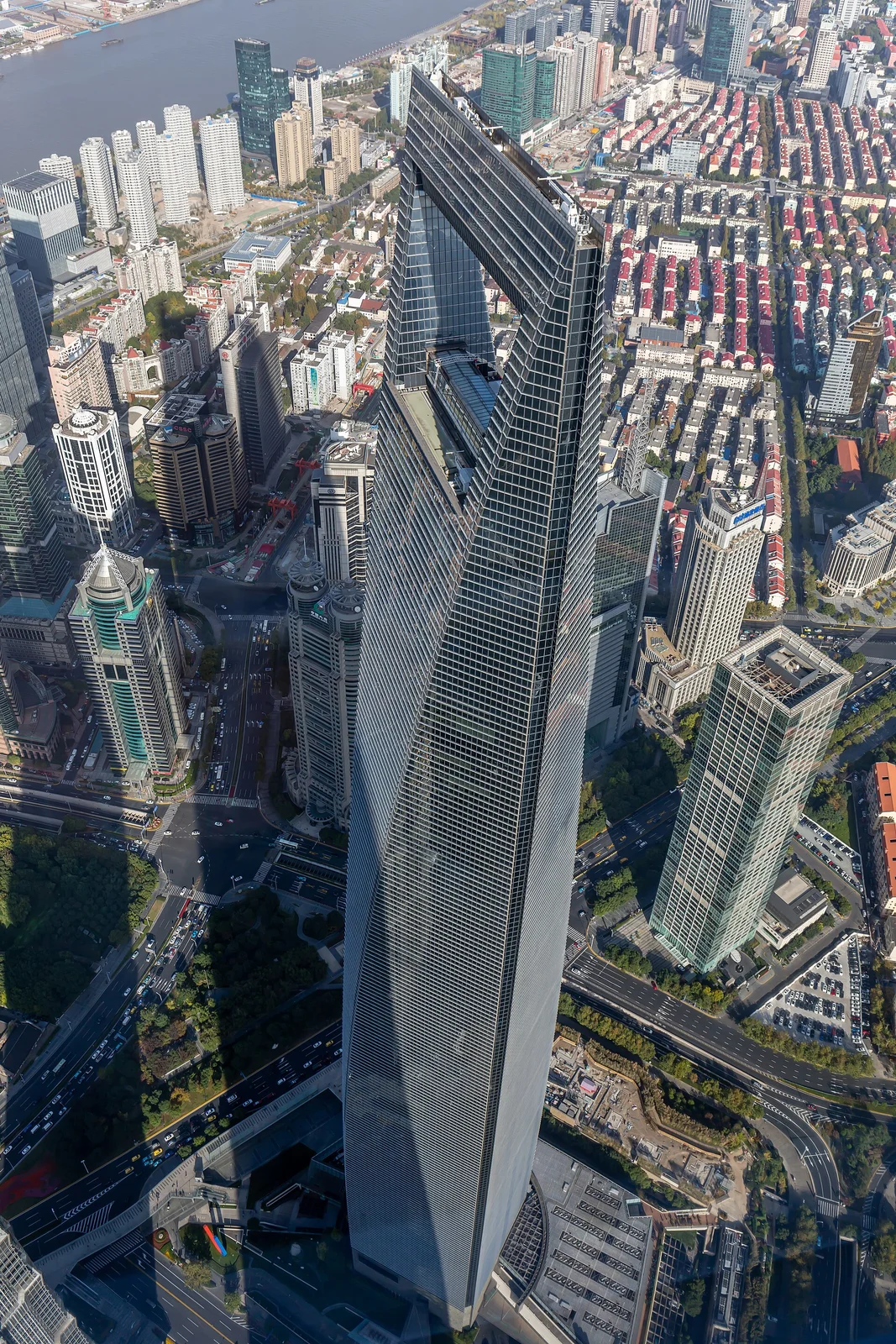
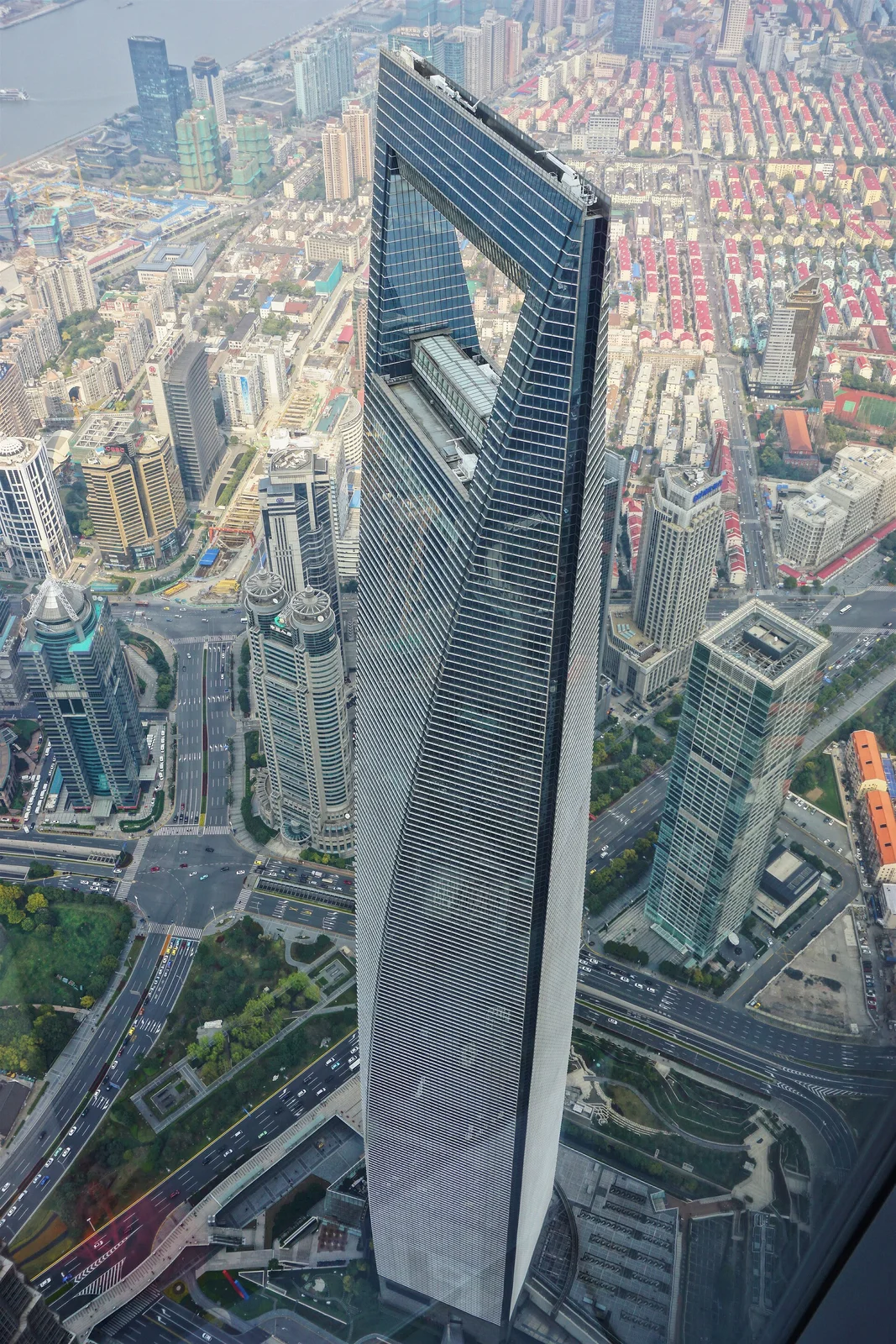
KPF’s tower places a large opening near its summit and combines office floors with the Park Hyatt Shanghai. The project credits Shanghai Modern as architect of record and Irie Miyake as executive architect.
What to look for
- 01
A public viewpoint above mixed uses
CONTINUE EXPLORING
Related works
Singapore · Singapore
London · United Kingdom
GAD / DESIGN STUDY
Shanghai World Financial Center and the Value of Structural Revision
English study · Chinese summary · · Study dated 2026-10-05
Shanghai World Financial Center was completed in 2008 in Shanghai’s Lujiazui district. Kohn Pedersen Fox designed the tower for Mori Building, working with structural engineer Leslie E. Robertson Associates. KPF credits Shanghai Modern as architect of record and Irie Miyake as executive architect. The building combines offices and retail with the Park Hyatt Shanghai and originally incorporated observation facilities near its summit. Its familiar upper opening is only one part of a closely coordinated architectural and engineering proposition. KPF’s project record establishes the programme and team.
An outline shaped by changing uses
The tower develops from a broad lower form into a narrower upper portion, with the large aperture giving its crown a recognisable finish. KPF’s discussion of mixed-use design identifies the opening as trapezoidal and situates the project within the firm’s development of vertically stacked programmes.
Architecturally, the relationship between the office floors below and hospitality above provides a useful way to read the taper. Different uses require different relationships between core, room depth and external wall. A changing outline can accommodate those differences while maintaining an overall order. The building does not need to disclose every internal boundary on its exterior to make that progression legible.
The aperture changes how the top is perceived. Instead of ending solely in additional solid mass or a detached point, the tower frames a piece of sky. This is an editorial reading of its form: the void helps give the upper volume a visual boundary and makes the crown recognisable from a distance. Its presence should not be treated as proof of a particular aerodynamic saving without evidence specific to that claim.
The foundation made redesign necessary
KPF’s account of supertall design responsibility describes a request to increase the building’s height after foundation work had begun. The team and LERA revised the structural approach to a diagonal-braced frame and outrigger-truss system. KPF reports that the taller revised scheme weighed less than the earlier proposal, allowing the existing foundation constraint to be addressed.
That sequence is valuable because it reveals design as a process of reconsidering relationships, rather than simply adding material to meet a larger demand. The foundations established a limit that the upper structure had to respect. Structural revision could then affect column size, floor planning and the appearance of enclosure. Those consequences make the engineering decision part of the architecture, not an invisible correction made after the form was settled.
A landmark with several measures of success
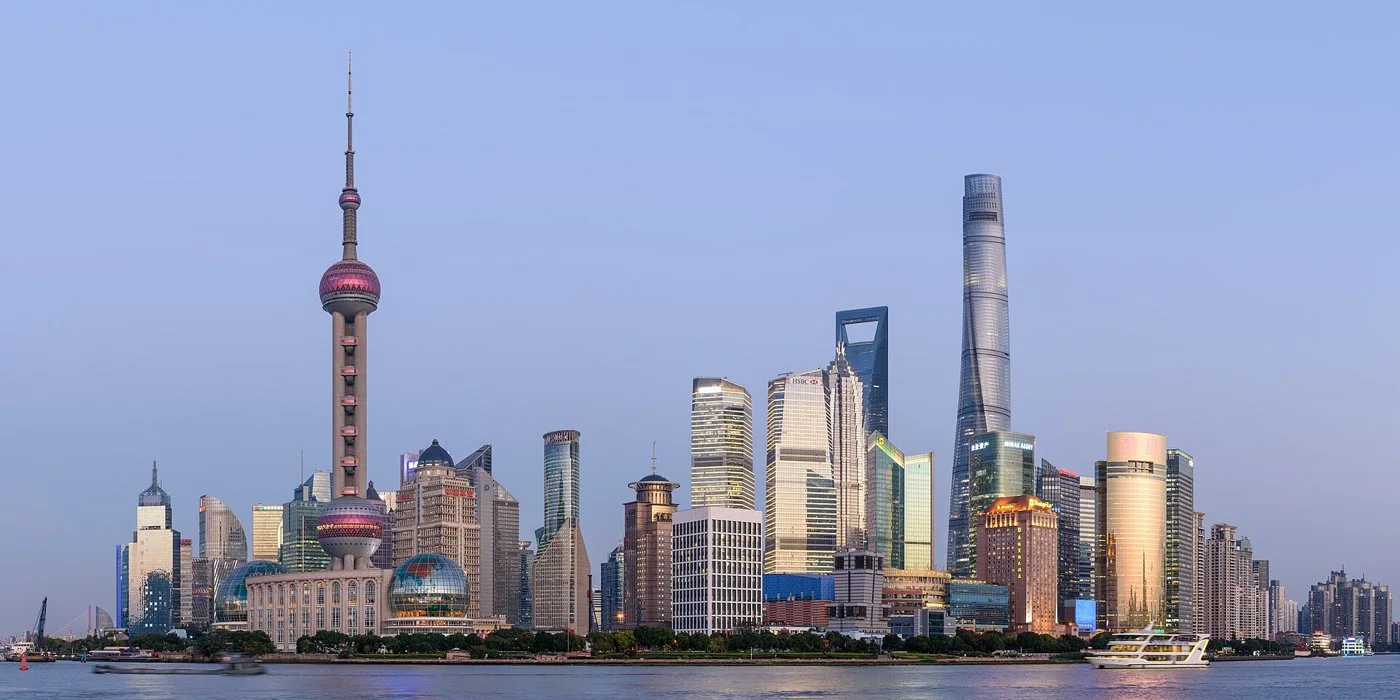
The developer’s project overview identifies the site on Century Avenue and the building’s 492-metre height. Those dimensions locate the project within the scale of Lujiazui, but they do not settle its quality as a workplace, hotel or contribution to the street.
A useful review must keep those measures distinct. Skyline clarity concerns the whole figure; everyday usefulness concerns entrances, lifts, rooms and routes. Shanghai World Financial Center demonstrates how a strong outline can survive significant technical revision when programme and structure are treated together. Its transferable lesson lies in that coordination, and in the willingness to revise a system when fixed constraints make the first answer insufficient.