
Abu Dhabi · United Arab Emirates
 View larger
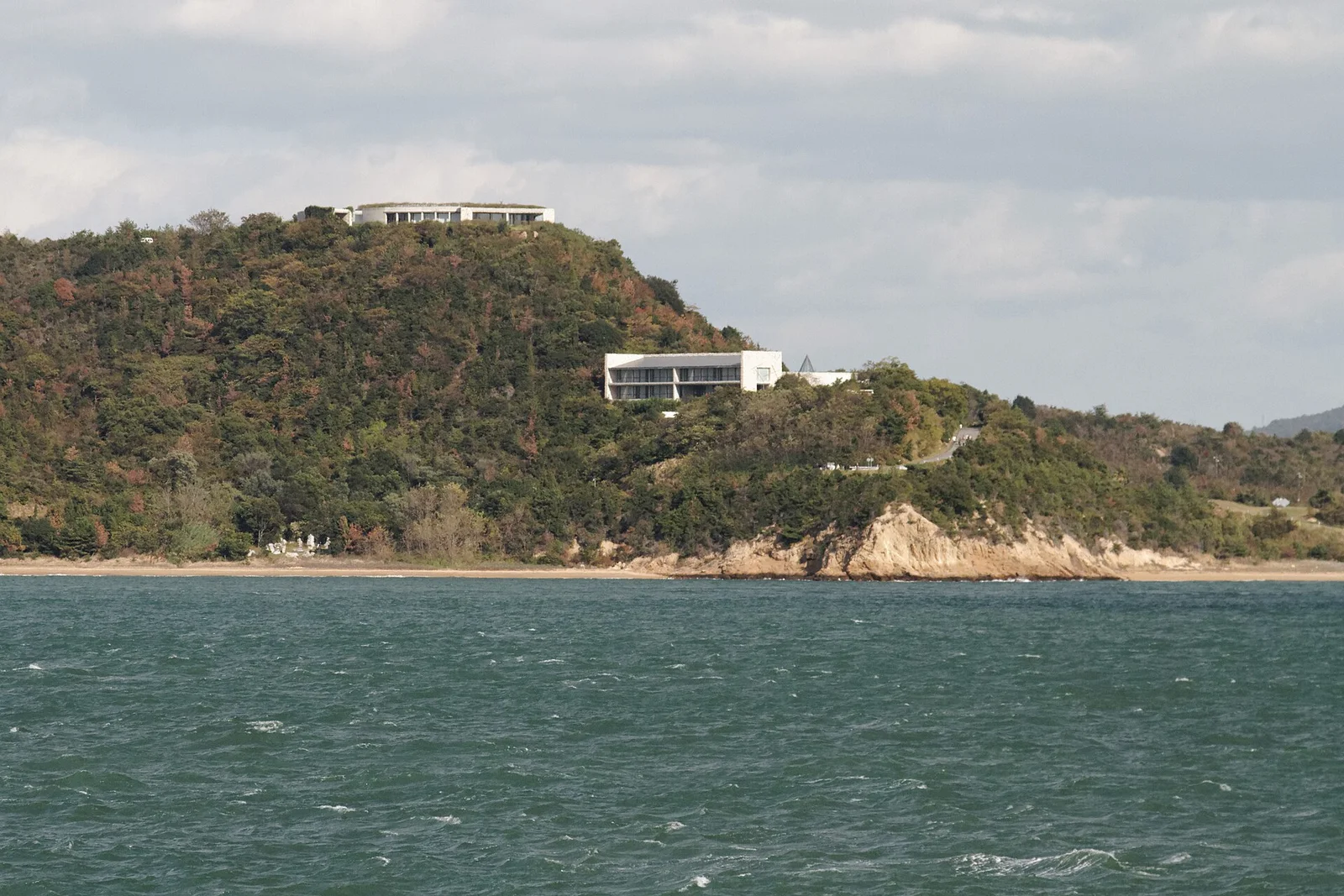
A museum and hotel overlooking the Seto Inland Sea.
The project, in context
Opened in 1992, Benesse House Museum links accommodation and exhibition spaces on Naoshima. Ando’s large openings bring the island landscape into the building, making the setting part of the experience of art.
What to look for
- 01
Museum and accommodation
- 02
Sea-facing site
- 03
Landscape framed by openings
CONTINUE EXPLORING
Related works
Rome · Italy
Paris · France
GAD / DESIGN STUDY
Benesse House Museum: Staying Inside an Art Landscape
English study · Chinese summary · · Study dated 2026-10-08
Benesse House Museum makes time part of an architectural programme. Opened on Naoshima in July 1992, Tadao Ando’s building combines a contemporary art museum with a hotel on high ground overlooking the Seto Inland Sea. A day visitor passes through an exhibition; an overnight guest can return to the same surroundings at another hour. That difference makes the project more than a museum with accommodation attached. It proposes a longer relationship between a person, a collection and a landscape. Museum overview, project chronology.
The sea is not simply scenery beyond the property. Large openings bring an external horizon into the interior, placing the changing light and weather alongside the relatively stable presence of art. This establishes two different kinds of attention. A work may ask for close observation, while the landscape draws the eye into the distance. The architecture provides intervals in which a visitor can move between those scales without leaving the larger experience of the museum.
The institution’s account also stresses that artists selected particular locations and made works for them. Art appears beyond conventional galleries, extending through the building and into the nearby coast and forest. A circulation space can therefore become a destination rather than an empty connector. The useful distinction is between a neutral room that could hold many exhibitions and a relationship in which a work and its location have become mutually specific.
This puts unusual demands on architectural restraint. The building needs enough identity to establish a memorable setting, but it must leave room for individual artists to make their own spatial claims. Its value cannot be judged only through the appearance of an empty interior. A more revealing test is whether a work can change the meaning of a wall, an opening or a route while those elements remain legible as parts of a coherent building.
Benesse’s archive places the museum within the longer Naoshima Cultural Village initiative and records Ando’s involvement before the museum opened. This was the beginning of an evolving cultural landscape, rather than a fully formed collection of buildings delivered at once. The distinction remains useful when reading the hotel today: the Oval opened in July 1995, and other accommodation and art buildings followed in later phases. Their images should not be treated as interchangeable illustrations of the original 1992 museum. Institutional archive.
The museum-hotel combination also introduces a productive difference between access and occupation. Staying overnight can make repeated encounters possible, but it does not turn every guest space into a public gallery. The architectural reading should preserve the separate needs of sleeping, viewing, servicing and moving through the site. Their proximity is what makes the programme distinctive; their complete fusion would make its operation difficult.
Benesse House Museum’s lasting contribution is the way it stretches a cultural visit across space and duration. A view returns, a route is retraced and an artwork is encountered under different conditions. The project demonstrates how a building can support that repetition without prescribing a single dramatic sequence. Its landscape is something to revisit as well as something to see.