
Chicago · United States
United States / PRACTICE PROFILE
Studio Gang
Study Studio Gang through Writers Theatre and the Arcus Center, where circulation, shared rooms and material choices give civic interaction a spatial form.
An approach to architecture
Study Studio Gang through Writers Theatre and the Arcus Center, where circulation, shared rooms and material choices give civic interaction a spatial form.
Source-linked study published on 1 October 2026. Chinese sections are summaries. Reading notes: No current public-access hours or guaranteed social outcomes are asserted. No whole-building carbon-negative claim is inferred from a source claim about wood walls.
A practice working across scales
Founded and led by Jeanne Gang, Studio Gang is an architecture and urban design practice with offices in Chicago, New York, San Francisco and Paris. Its stated approach connects people with communities and environments through collaboration across disciplines. Two smaller civic and cultural projects make that broad position particularly accessible. Writers Theatre and the Arcus Center for Social Justice Leadership both give shared space a prominent role, allowing the organisation of a building to express the activities and encounters it is intended to support. Official studio profile.
A theatre with room around the performance
Writers Theatre in Glencoe, Illinois, completed in 2016, groups two performance venues and supporting spaces around a central lobby. Timber trusses and a lighter timber lattice give this gathering space and its elevated canopy walk a distinctive structural character. The lobby can accommodate events and informal performances, and in suitable weather opens toward the adjacent park. These decisions extend the theatre's spatial life beyond its auditoria. A useful reading follows the visitor's route from the town and park through the shared interior, then into the more concentrated relationship between audience and stage. Official Writers Theatre account.
An institutional centre with a domestic heart
The Arcus Center at Kalamazoo College, completed in 2014, uses a living room, hearth and kitchen to support meetings and informal exchange. Its three-directional plan addresses the campus, a grove and the surrounding neighbourhood. Transparent ends orient the building toward those contexts, while wood-masonry walls give its enclosure a different material presence. The arrangement brings the scale of everyday conversation into an institution devoted to social justice leadership. This is a specific spatial proposition: food, sitting and crossing paths receive a central position in the building's organisation. Official Arcus Center account.
From a design ambition to daily use
Across these projects, gathering is supported through more than the provision of a large room. Thresholds, views, circulation and the placement of ordinary activities contribute to how people may occupy the building together. Structure also participates: the theatre's timber system frames an elevated walk, while the Arcus Center's wall construction helps define the character of its shared interior. The buildings offer valuable material for comparing architectural intention with patterns of use after opening. Plans and sections can establish the available opportunities; observation and user accounts are needed to understand which opportunities persist. That distinction gives Studio Gang's civic work a productive place in discussions of how design supports public life. Writers Theatre and Arcus Center.
Explore the GAD index
Continue with the GAD project record for Writers Theatre.
CulturalResidentialPublic space
Why this practice is in the selection
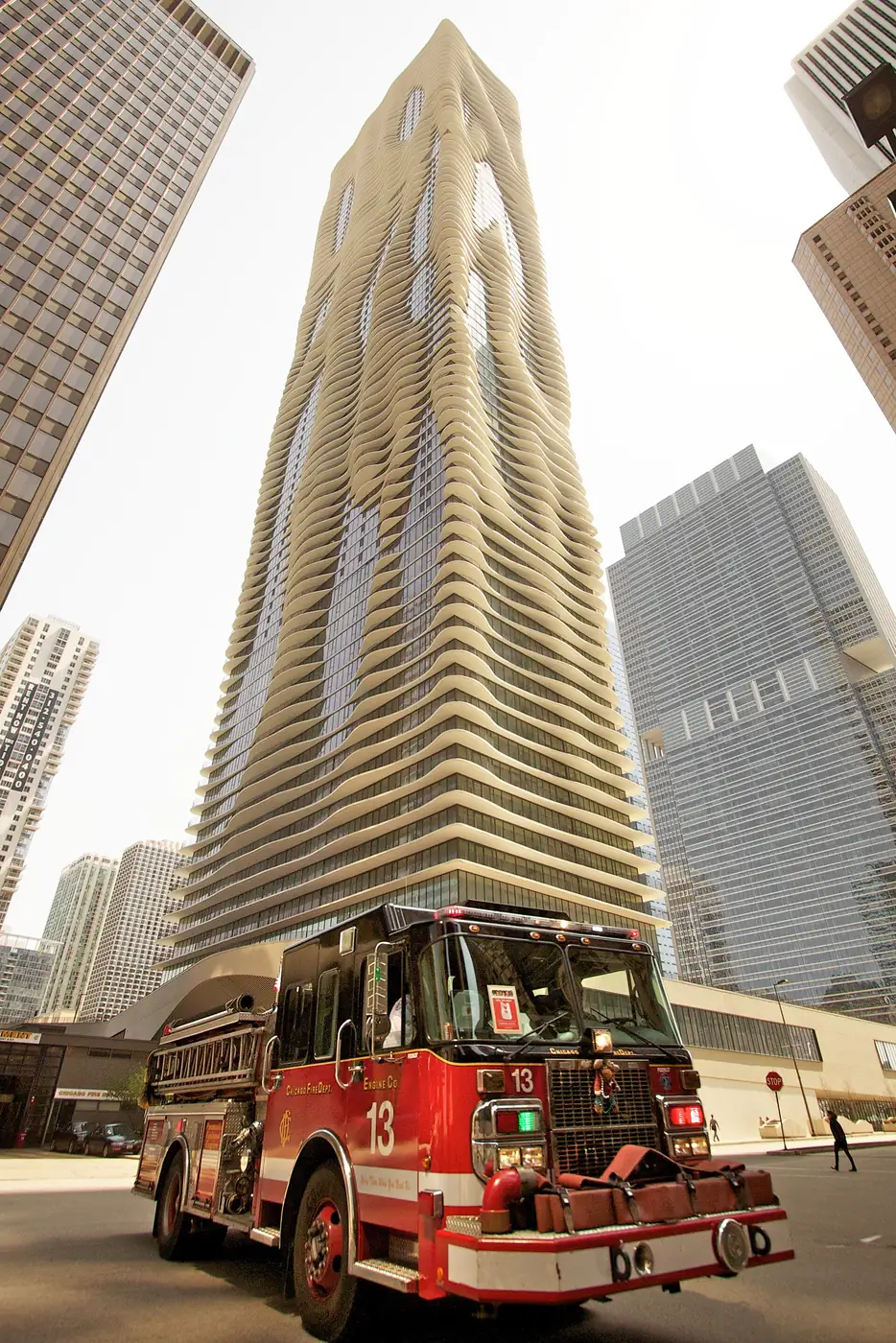
- Studio Gang has a documented architecture contribution in Aqua Tower; see the credited original project record. Source 2026-10-03
Editorial selection based on documented contributions; this is not an objective global quality rank or a paid placement. Global 1000 project & selection method
Contact the practice
Public business routes published by the practice or credited professional source. GAD does not represent this practice.
- Practice contact pageOpen contact pageSource · Checked 2026-10-03
Representative works · source references
Read the original project record for photographs, credits and full details. These references are separate from GAD’s project studies.
- Aqua Tower Work published in the practice’s own project portfolio; exact project scope at sourceAttribution source · 2026-10-03
- The St. Regis Chicago Work published in the practice’s own project portfolio; exact project scope at sourceAttribution source · 2026-10-03
- Richard Gilder Center Work published in the practice’s own project portfolio; exact project scope at sourceAttribution source · 2026-10-03
SELECTED IN THE INDEX
Representative projects
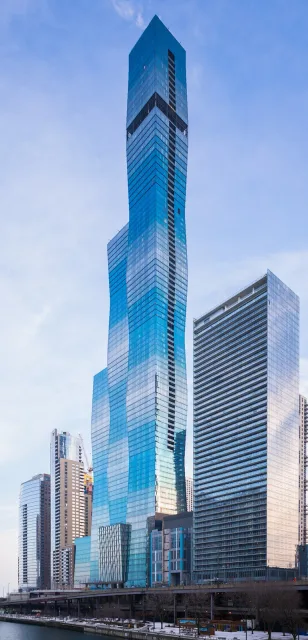
Chicago · United States
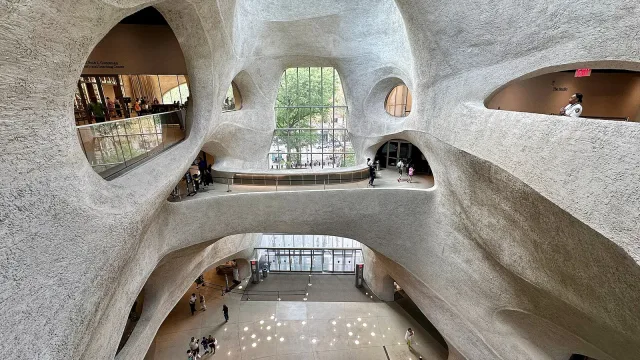
New York · United States
Glencoe · United States