Explore 594 illustrated award cases: actual buildings and architectural honours, with the programme, year and official evidence stated separately.
Built-project awards and career honours recognise different subjects. Award year, building completion and photography date are distinct; a personal honour does not transfer to every building by its recipient. Photographs open at a larger size with creator and licence references.
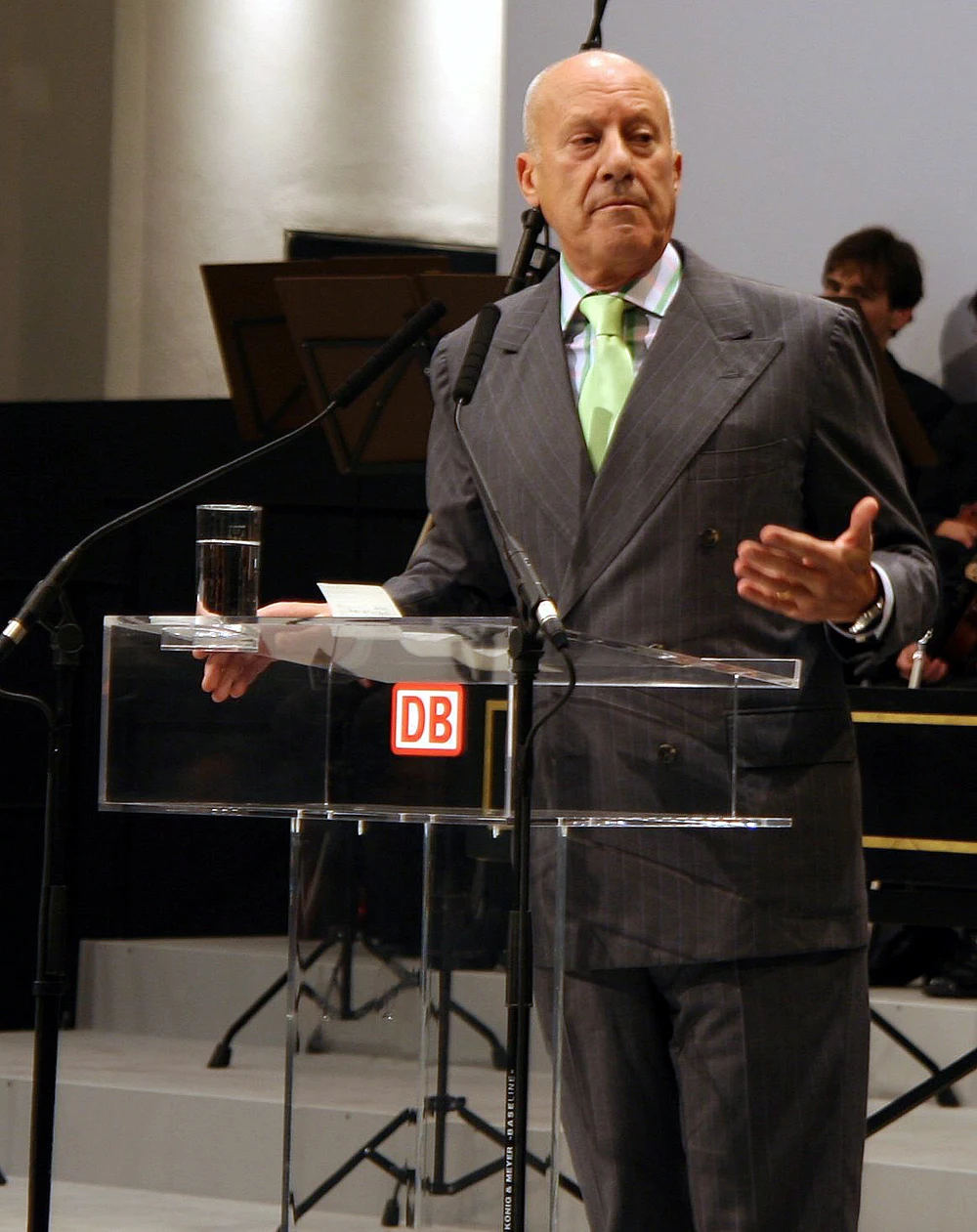
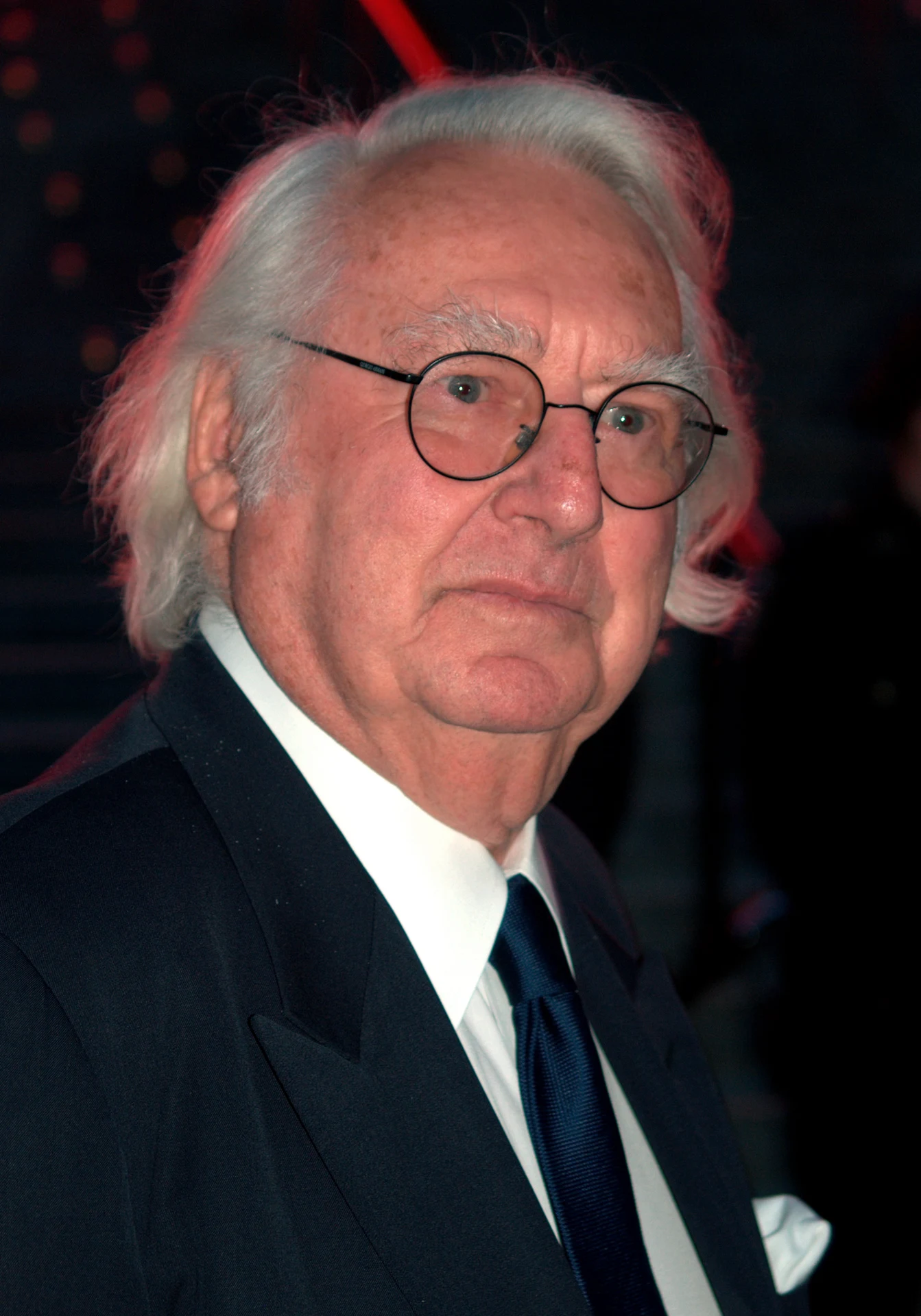
The 1984 Pritzker Architecture Prize recipient record names Richard Meier. Richard Meier established his independent practice in 1963, beginning with a house for his parents. The Smith House in Connecticut followed in 1965. His biography places these early residential commissions within a continuing dialogue with modernist and historical architectural influences.
Richard Meier, recipient of 1984 Pritzker Architecture Prize. This is a portrait, not a photograph of the award ceremony.
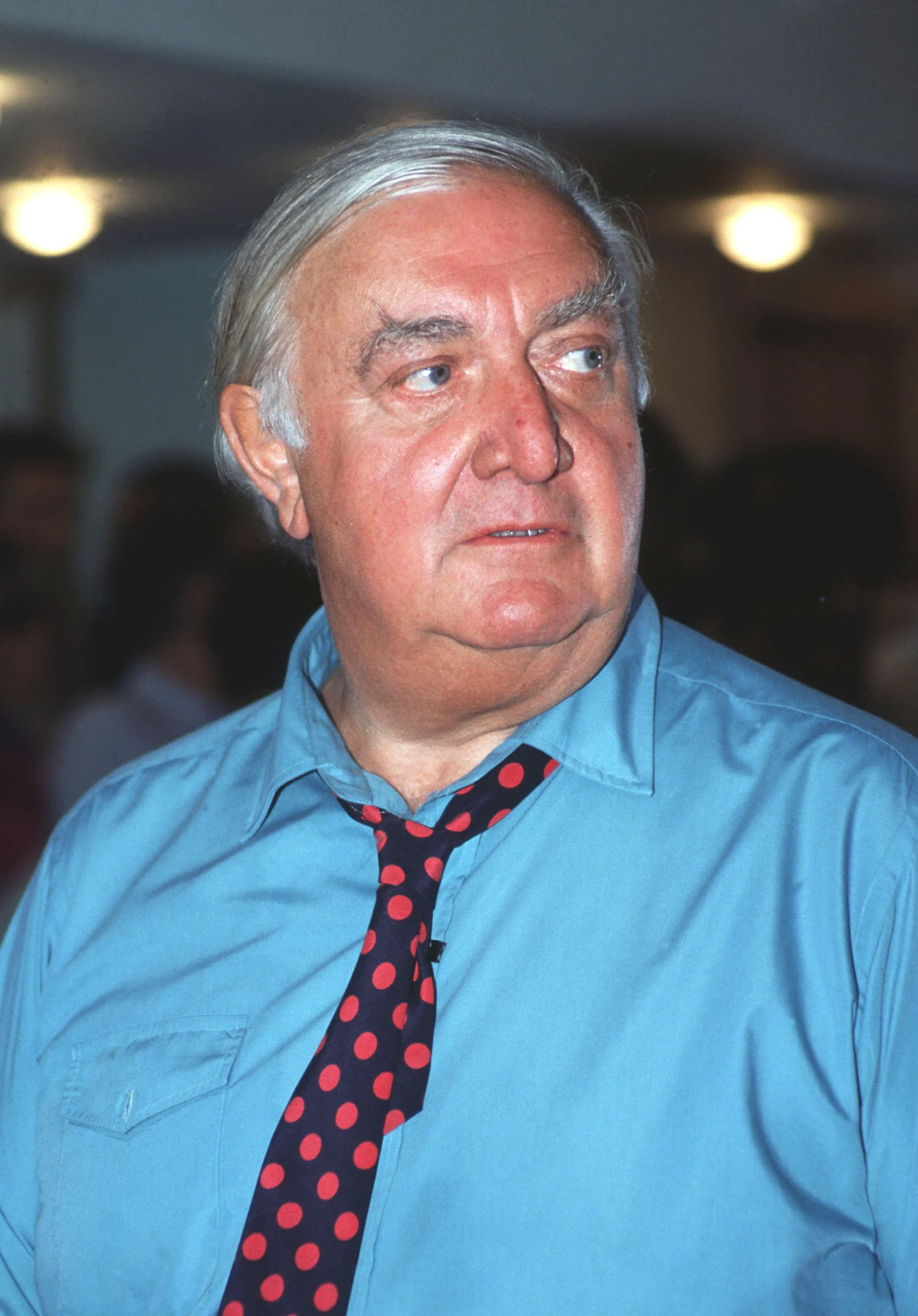
Sir Norman Foster received the 1983 RIBA Royal Gold Medal. The honour recognises sustained influence on architecture across a body of work. This entry records a career distinction; its photograph identifies a recipient rather than an award-winning building.
Portrait photograph of Norman Foster; this image does not depict an award-winning building or establish the date of the award ceremony.
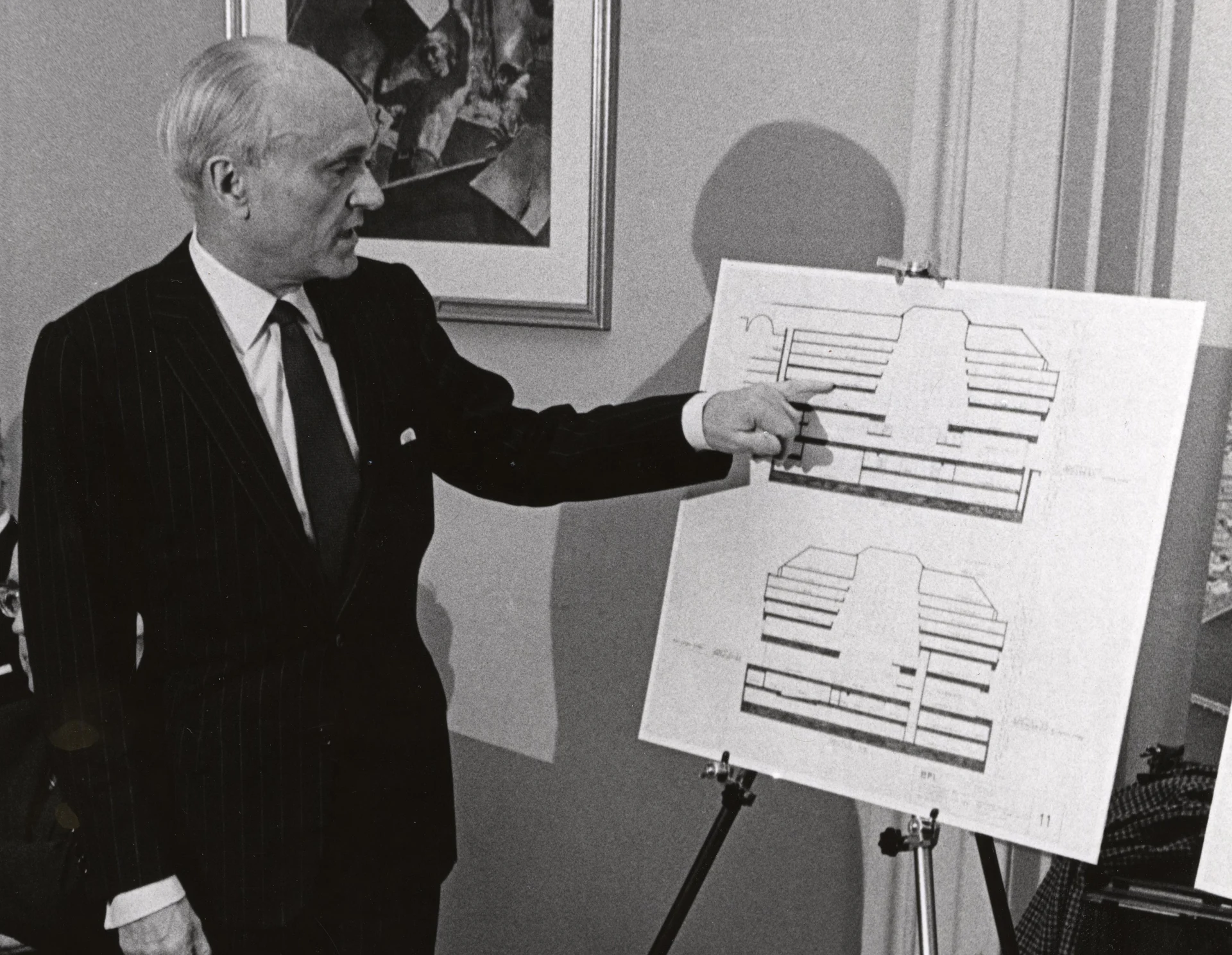
The 1981 Pritzker Architecture Prize recipient record names James Stirling. James Stirling studied at Liverpool and established a London partnership with James Gowan in 1956. Their work included Leicester University's Engineering Building. From 1971 he collaborated with Michael Wilford on a widening range of museums, galleries, libraries and theatres.
James Stirling, recipient of 1981 Pritzker Architecture Prize. This is a portrait, not a photograph of the award ceremony.
Sir James Stirling received the 1980 RIBA Royal Gold Medal. The honour recognises sustained influence on architecture across a body of work. This entry records a career distinction; its photograph identifies a recipient rather than an award-winning building.
Portrait photograph of James Stirling; this image does not depict an award-winning building or establish the date of the award ceremony.
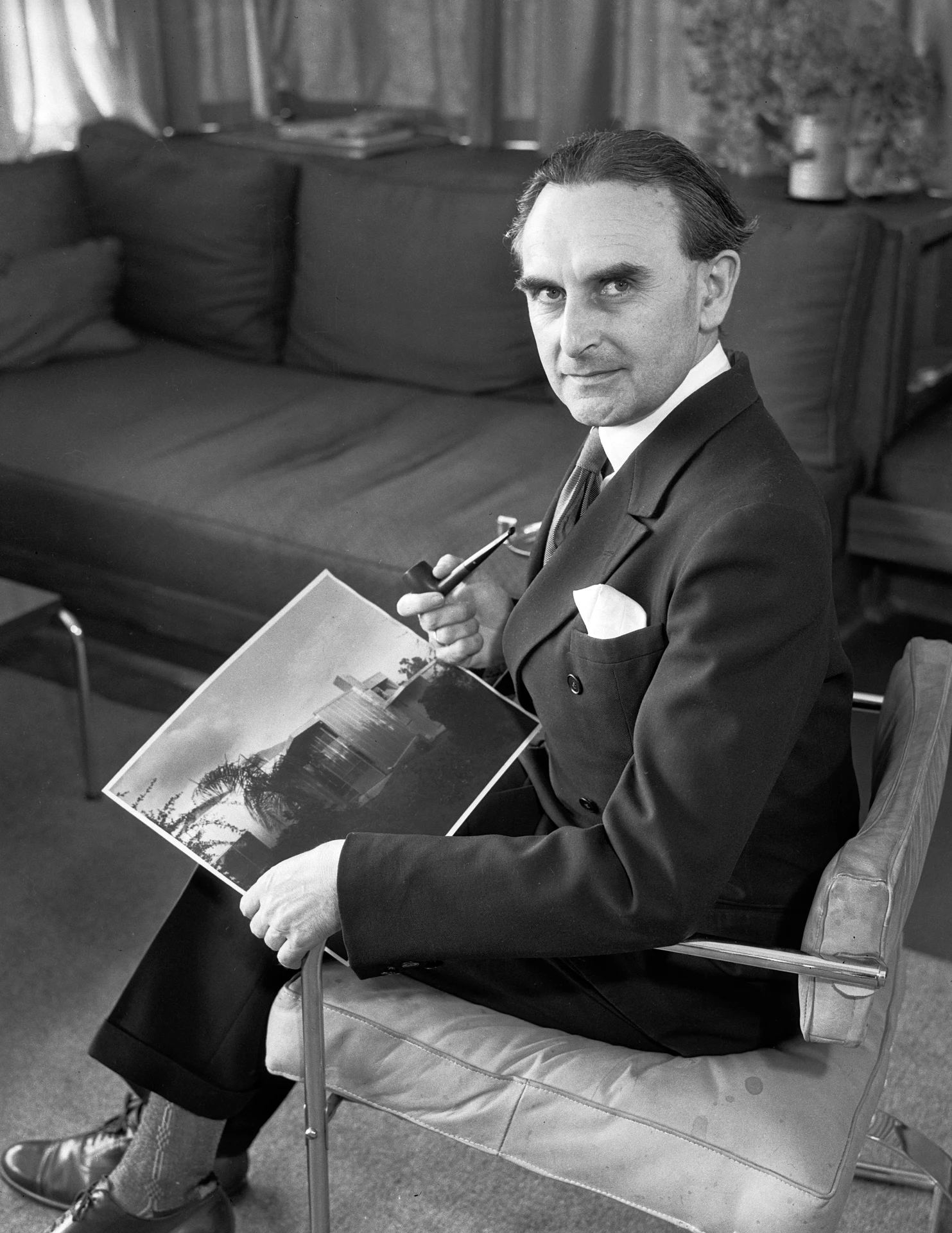
The 1979 Pritzker Architecture Prize recipient record names Philip Johnson. Philip Johnson worked as a client, critic, author, historian and museum director before entering architectural practice. His Glass House in New Canaan was designed as his master's thesis and completed in 1949. He later collaborated with Mies van der Rohe on New York's Seagram Building and worked with John Burgee.
Philip Johnson, recipient of 1979 Pritzker Architecture Prize. This is a portrait, not a photograph of the award ceremony.
The 1978 AIA Gold Medal recipient record names Philip Cortelyou Johnson, FAIA. Philip Johnson worked as a client, critic, author, historian and museum director before entering architectural practice. His Glass House in New Canaan was designed as his master's thesis and completed in 1949. He later collaborated with Mies van der Rohe on New York's Seagram Building and worked with John Burgee.
Philip Johnson, recipient of 1978 AIA Gold Medal. This is a portrait, not a photograph of the award ceremony.
The 1977 AIA Gold Medal recipient record names Richard Joseph Neutra, FAIA. AIA describes the Gold Medal as its highest annual honour for lasting influence on architectural theory and practice. This recipient record concerns an individual or collaborative body of work, not a single building or its completion year.
Richard Neutra, recipient of 1977 AIA Gold Medal. This is a portrait, not a photograph of the award ceremony.
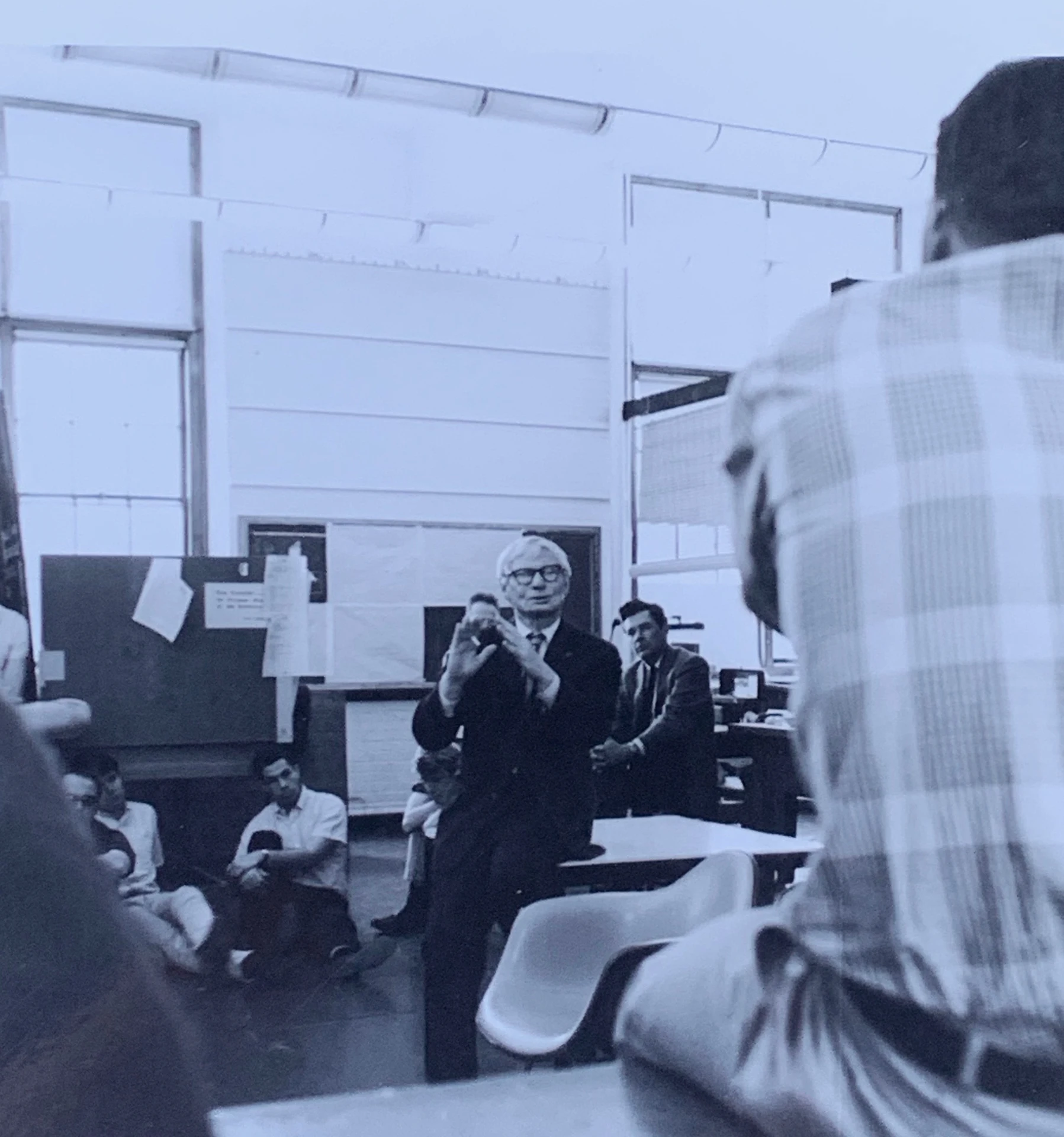
Louis Kahn received the 1972 RIBA Royal Gold Medal. The honour recognises sustained influence on architecture across a body of work. This entry records a career distinction; its photograph identifies a recipient rather than an award-winning building.
Portrait photograph of Louis Kahn; this image does not depict an award-winning building or establish the date of the award ceremony.
The 1971 AIA Gold Medal recipient record names Louis I. Kahn, FAIA. AIA describes the Gold Medal as its highest annual honour for lasting influence on architectural theory and practice. This recipient record concerns an individual or collaborative body of work, not a single building or its completion year.
Louis Kahn, recipient of 1971 AIA Gold Medal. This is a portrait, not a photograph of the award ceremony.
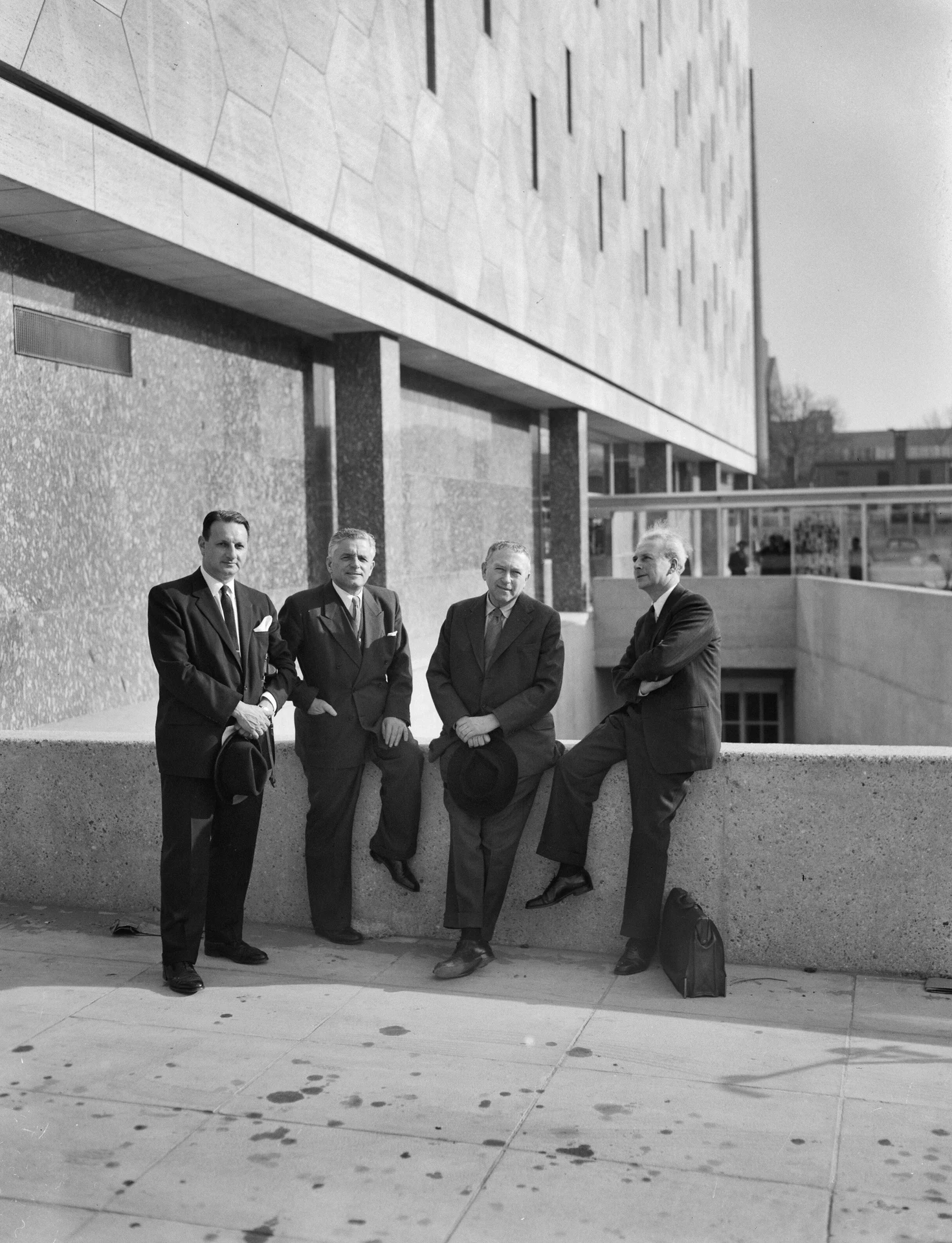
The 1968 AIA Gold Medal recipient record names Marcel Breuer, FAIA. AIA describes the Gold Medal as its highest annual honour for lasting influence on architectural theory and practice. This recipient record concerns an individual or collaborative body of work, not a single building or its completion year.
Marcel Breuer, recipient of 1968 AIA Gold Medal. This is a portrait, not a photograph of the award ceremony.
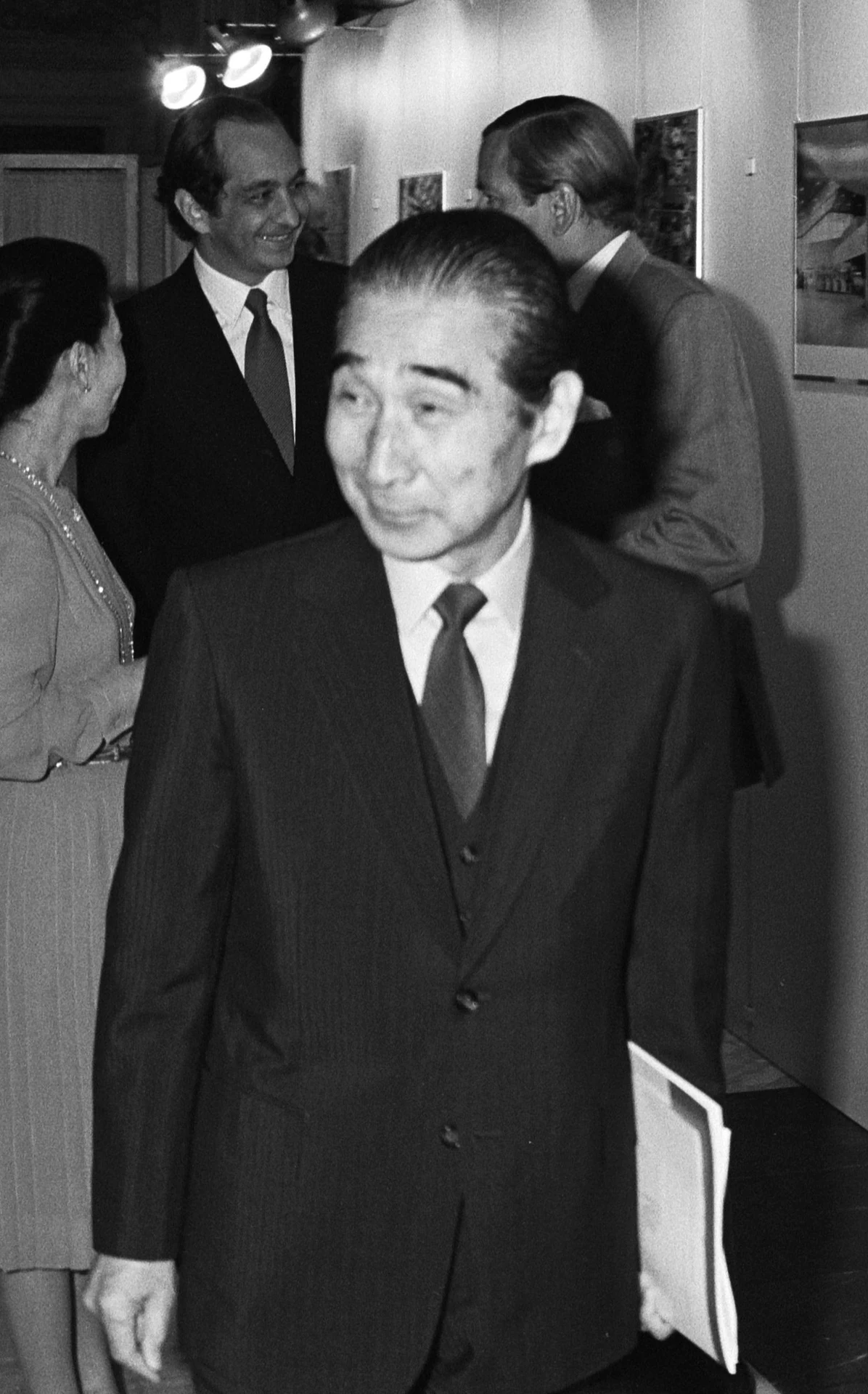
The 1966 AIA Gold Medal recipient record names Kenzo Tange, Hon. FAIA. Kenzo Tange studied architecture at Tokyo University and established the Tange Laboratory after becoming an assistant professor in 1946. His work includes Hiroshima's Peace Center and Park and research into large-city spatial structure. The official biography links that research with Plan for Tokyo 1960, a response to urban growth and change.
Kenzo Tange, recipient of 1966 AIA Gold Medal. This is a portrait, not a photograph of the award ceremony.
Kenzo Tange received the 1965 RIBA Royal Gold Medal. The honour recognises sustained influence on architecture across a body of work. This entry records a career distinction; its photograph identifies a recipient rather than an award-winning building.
Portrait photograph of Kenzo Tange; this image does not depict an award-winning building or establish the date of the award ceremony.
The 1963 AIA Gold Medal recipient record names Alvar Aalto, Hon. FAIA. AIA describes the Gold Medal as its highest annual honour for lasting influence on architectural theory and practice. This recipient record concerns an individual or collaborative body of work, not a single building or its completion year.
Alvar Aalto, recipient of 1963 AIA Gold Medal. This is a portrait, not a photograph of the award ceremony.
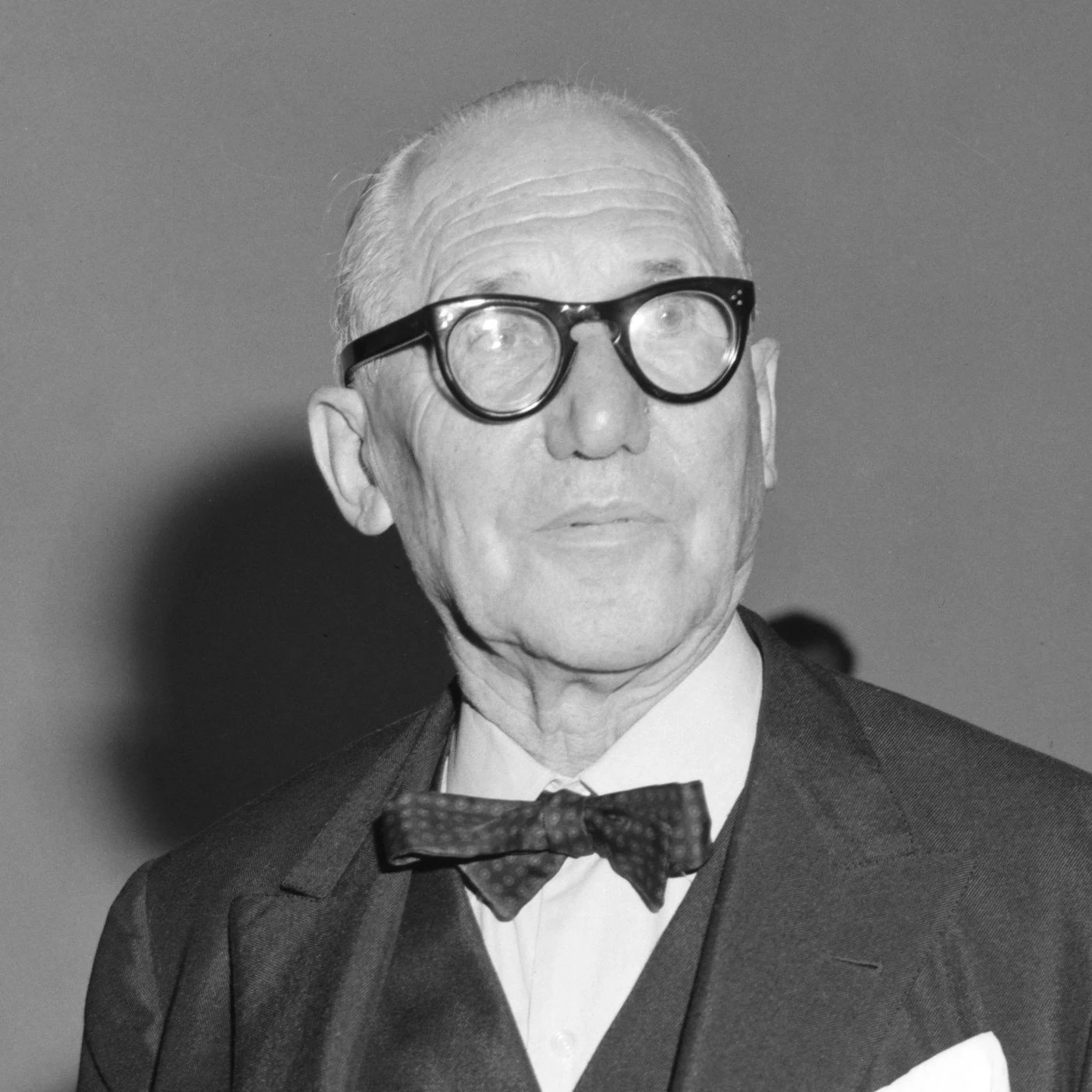
Le Corbusier (Charles Edouard Jeanneret-Gris, Hon. FAIA)
Architect honour
The 1961 AIA Gold Medal recipient record names Le Corbusier (Charles Edouard Jeanneret-Gris, Hon. FAIA). AIA describes the Gold Medal as its highest annual honour for lasting influence on architectural theory and practice. This recipient record concerns an individual or collaborative body of work, not a single building or its completion year.
Le Corbusier, recipient of 1961 AIA Gold Medal. This is a portrait, not a photograph of the award ceremony.
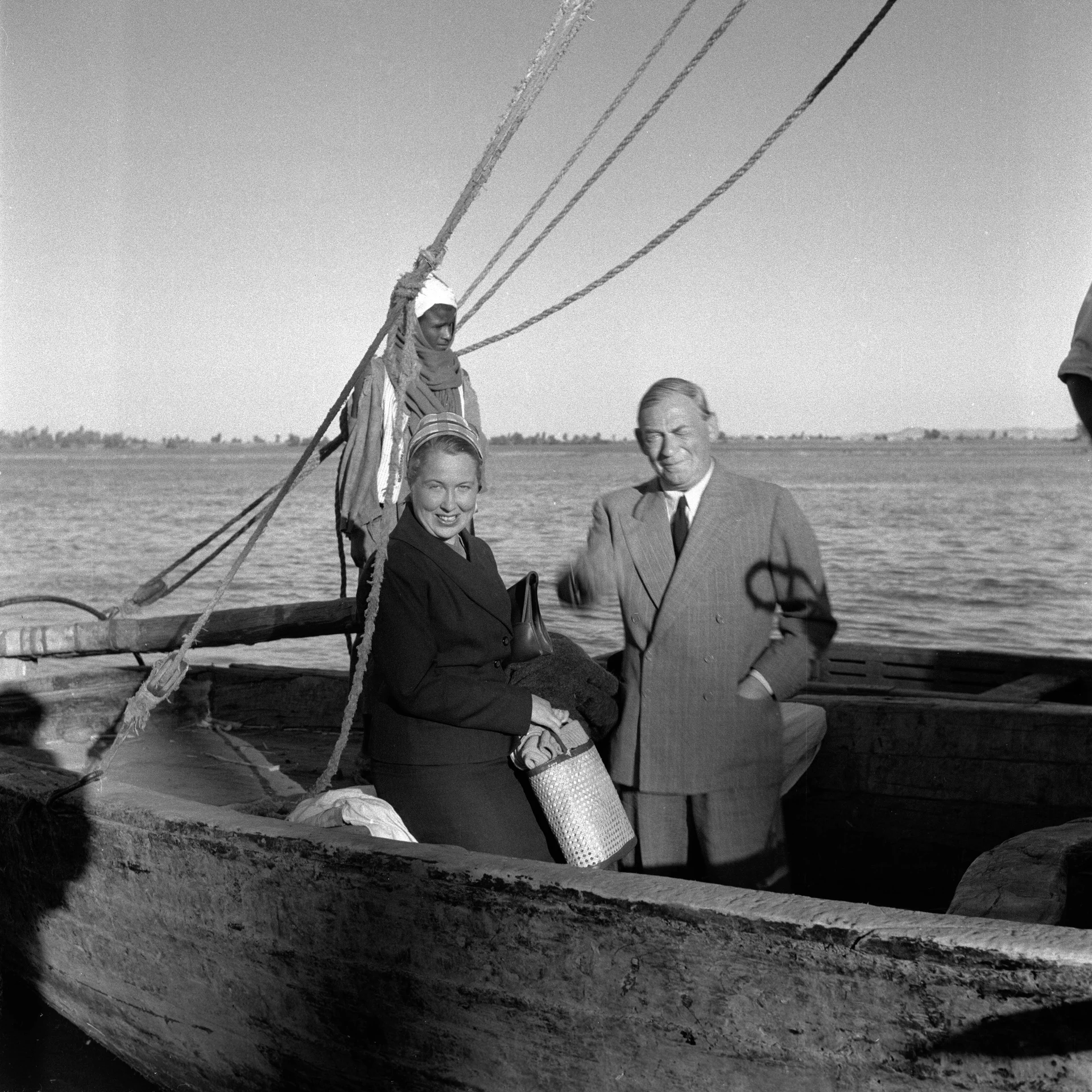
Alvar Aalto received the 1957 RIBA Royal Gold Medal. The honour recognises sustained influence on architecture across a body of work. This entry records a career distinction; its photograph identifies a recipient rather than an award-winning building.
Portrait photograph of Alvar Aalto; this image does not depict an award-winning building or establish the date of the award ceremony.
Le Corbusier received the 1953 RIBA Royal Gold Medal. The honour recognises sustained influence on architecture across a body of work. This entry records a career distinction; its photograph identifies a recipient rather than an award-winning building.
Portrait photograph of Le Corbusier; this image does not depict an award-winning building or establish the date of the award ceremony.
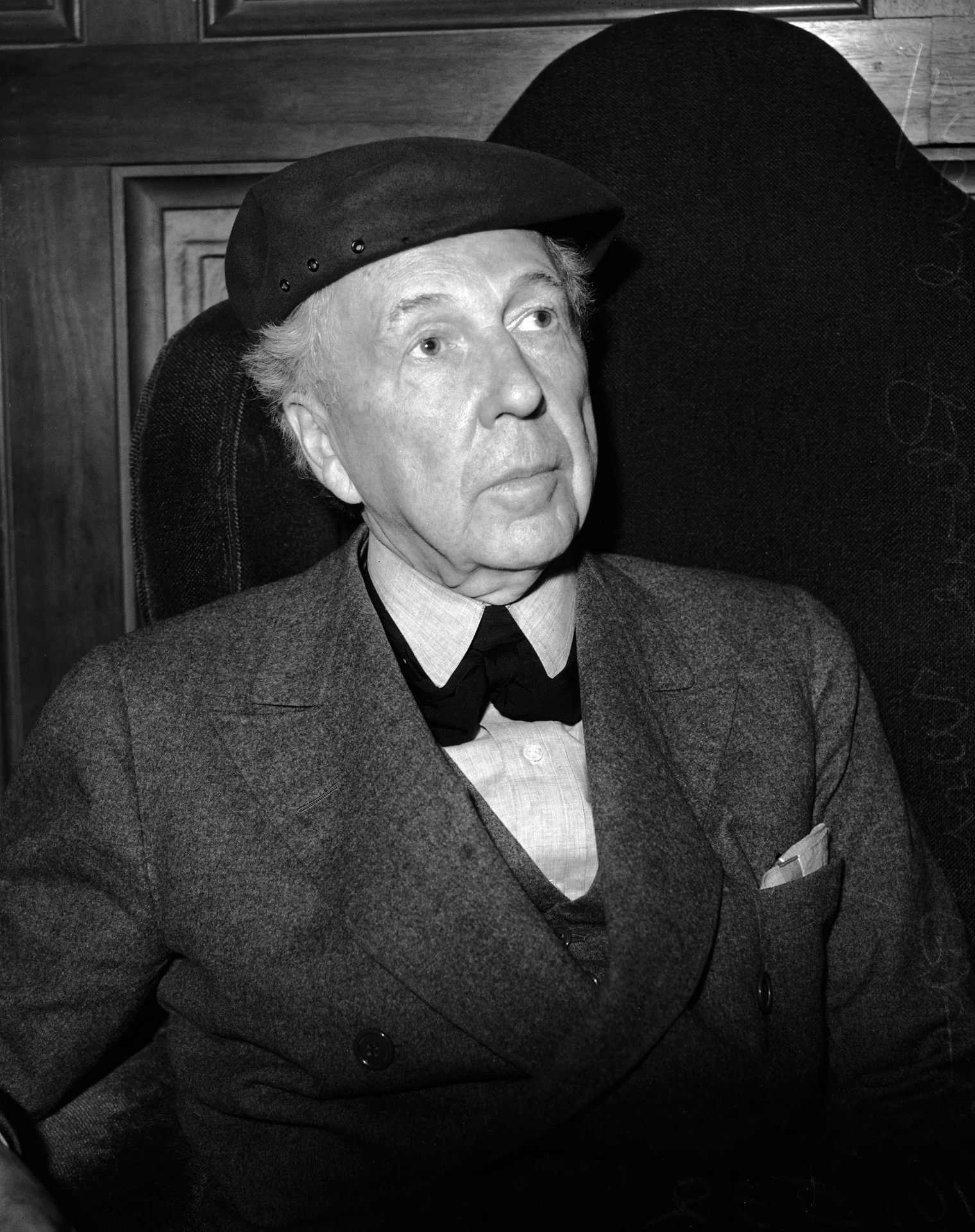
The 1949 AIA Gold Medal recipient record names Frank Lloyd Wright. AIA describes the Gold Medal as its highest annual honour for lasting influence on architectural theory and practice. This recipient record concerns an individual or collaborative body of work, not a single building or its completion year.
Frank Lloyd Wright, recipient of 1949 AIA Gold Medal. This is a portrait, not a photograph of the award ceremony.
Frank Lloyd Wright received the 1941 RIBA Royal Gold Medal. The honour recognises sustained influence on architecture across a body of work. This entry records a career distinction; its photograph identifies a recipient rather than an award-winning building.
Portrait photograph of Frank Lloyd Wright; this image does not depict an award-winning building or establish the date of the award ceremony.

 View larger