
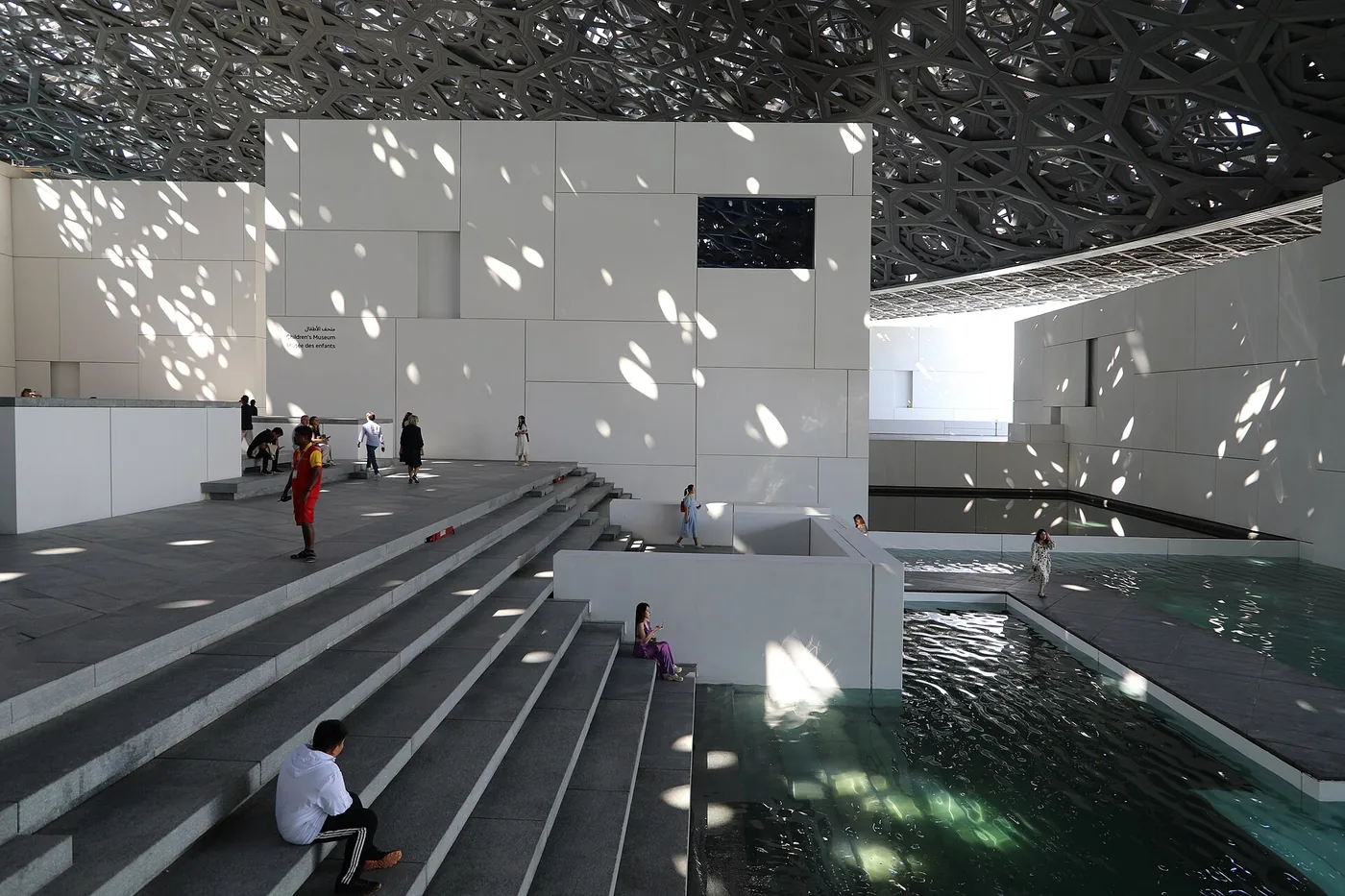
Abu Dhabi · United Arab Emirates
GAD / PROJECT FILENational Museum of QatarDoha · 2019Project reference · photography at source
Intersecting discs form a museum around a restored historic palace.
The project, in context
Inspired by the desert rose, Jean Nouvel’s composition links galleries into a route through Qatar’s history. The old palace remains part of the ensemble, bringing a historic building into dialogue with the new museum.
What to look for
- 01
Desert-rose geometry
- 02
Historic palace within the ensemble
CONTINUE EXPLORING
Related works
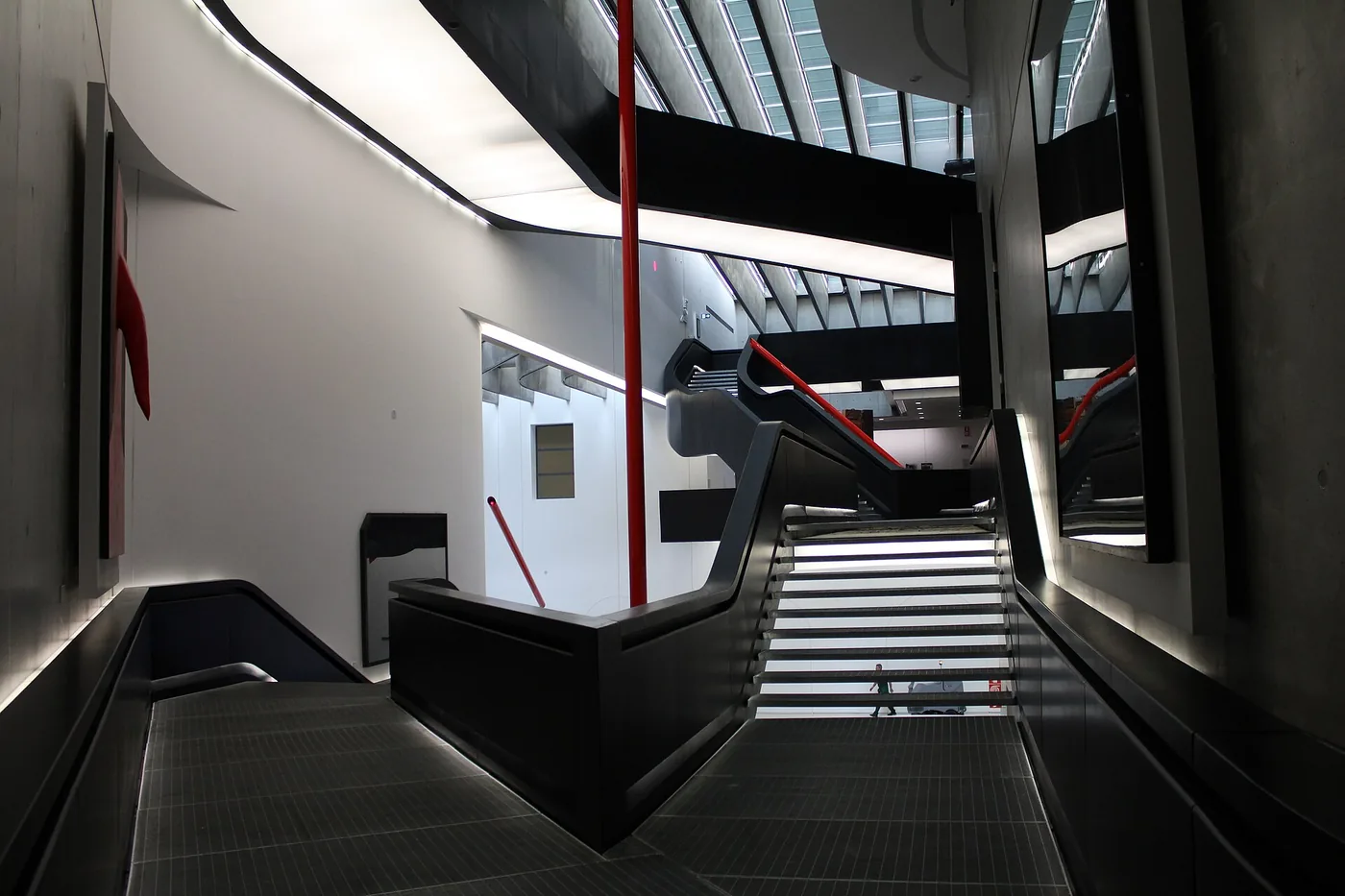
Rome · Italy
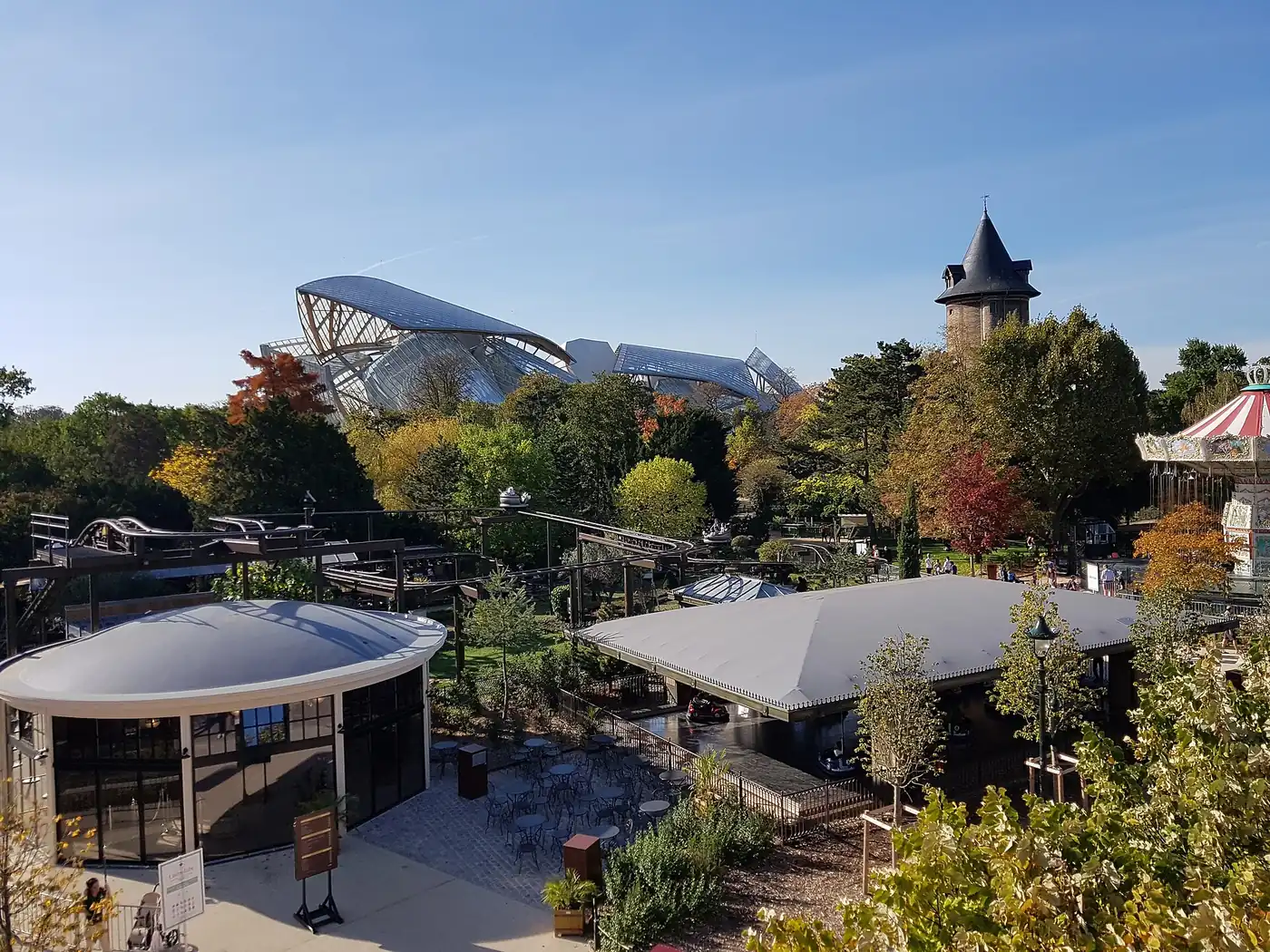
Paris · France
GAD / DESIGN STUDY
National Museum of Qatar and the Encounter with an Older Palace
English study · Chinese summary ·
A new museum around a historic centre
Jean Nouvel's National Museum of Qatar was completed in Doha in 2019. Ateliers Jean Nouvel records a programme of permanent and temporary galleries, an auditorium, conservation facilities and a public park. Its project credits identify Arup as engineer and QDC as architect of record. The museum is therefore a complex institutional ensemble as well as a recognisable composition of intersecting forms. Ateliers Jean Nouvel
The operator identifies the desert rose as the inspiration for the new building and confirms that it was constructed around the restored palace of Sheikh Abdullah bin Jassim Al Thani. Nouvel's account also emphasises protection from the sun. The architectural problem brings together symbolic form, environmental intention and the presence of an earlier building that already carries historical meaning. National Museum of Qatar Ateliers Jean Nouvel
Architectural reading
A national museum can organise history through its collections, but this project also gives visitors an older building to encounter. The palace changes the status of the historical narrative: some of the material evidence is the architecture itself. Its presence invites a reading across different kinds of authority, between the story presented by the contemporary institution and the surviving fabric of a previous setting.
For that encounter to remain meaningful, the palace needs to be understood as more than a small object enclosed by a larger one. Scale, approach and pauses in the route become important. A visitor should have the opportunity to recognise the old building on its own terms rather than experience it only as the finale of the new architecture. This is a useful criterion for evaluating heritage embedded within a major contemporary commission.
The desert-rose reference operates differently. It supplies a generative image capable of organising many pieces into a whole. The design interest lies in the translation from an irregular natural formation to rooms, junctions and weather protection. A metaphor cannot by itself resolve those practical requirements. Its architectural value depends on whether the resulting overlaps produce intelligible thresholds and useful spaces at the scale of occupation.
Shade gives the composition another dimension. A projecting surface can establish a protected edge and slow the transition between open ground and interior. That possibility should be described separately from any quantified claim about cooling demand. The form offers an environmental strategy; confirming its performance would require evidence about the envelope, systems and actual use.
The museum is most revealing when these questions are held together. It must present a collective history, accommodate the varied work of an institution and allow a much older palace to remain legible. Reading it only as a desert-rose silhouette compresses those responsibilities into an image. Reading the relationships among new rooms, shaded edges and retained fabric makes the project a more demanding precedent for cultural architecture.