
Iquique · Chile
Chile / PRACTICE PROFILE
ELEMENTAL
Housing and public architecture shaped around practical constraints.
An approach to architecture
ELEMENTAL works across housing, civic buildings and urban reconstruction. Its incremental housing projects reserve room for residents to adapt and extend their homes, while institutional work examines how shared space can support exchange.
HousingPublic buildingsUrban reconstruction
SELECTED IN THE INDEX
Representative projects
Constitución · Chile
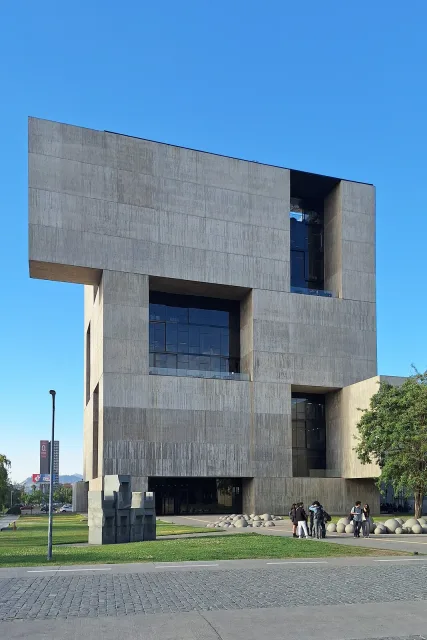
Santiago · Chile
GAD / DESIGN STUDY
ELEMENTAL: Designing the Framework for Housing to Change
English study · Chinese summary · · Study dated 2026-10-02
Practice and scope
ELEMENTAL describes itself as a practice founded in 2001, led by Alejandro Aravena with partners Gonzalo Arteaga, Juan Cerda, Víctor Oddó and Diego Torres. Its official profile includes housing, public space, objects and buildings. This breadth is important: incremental housing offers an entry into the office’s work, while the practice itself frames its activity around a wider range of questions and commissions. ELEMENTAL: About.
Quinta Monroy: location and growth
Quinta Monroy in Iquique is dated 2004 in the official Pritzker project book. The architect’s account identifies two linked intentions: retaining residents’ established urban networks and providing construction that would support later household expansion. ELEMENTAL’s own project page classifies the work as incremental housing. These sources establish a proposed relationship between location, the initial building and subsequent change. ELEMENTAL: Quinta Monroy project; Pritzker Prize: official 2016 project book, architect project statements.
Housing as a family of arrangements
ELEMENTAL’s current typology catalogue associates Quinta Monroy with a ground-floor house and a duplex above it. The same catalogue links Villa Verde in Constitución to a two-storey paired-house type on individual plots with private yards. Both entries explicitly allow expansion. This distinction is useful: the two projects share an incremental premise while organising land, vertical relationships and private outdoor space differently. ELEMENTAL catalogue: house plus duplex; ELEMENTAL catalogue: two-storey paired house.
Sharing project information
The office makes housing plans for Quinta Monroy, Villa Verde, Lo Barnechea and Monterrey available through its downloads page. It labels these materials as informational and warns that it is not responsible for errors in interpretation or use. Readers can therefore investigate the published schemes, but should not mistake access to drawings for confirmation that a design can be built unchanged in another location. ELEMENTAL: housing-plan downloads.
Editorial interpretation
ELEMENTAL’s housing work makes the timing of construction part of architectural design. A review should examine the division between what is provided initially and what occupants may add, then ask who carries the cost and responsibility for each stage. The future is designed into the scheme, but it remains dependent on circumstances outside the drawing.
This makes incremental housing a demanding subject for architectural criticism. An expandable space can offer choice; it can also leave a household with work it cannot yet afford. That is a question for evaluation, not a demonstrated outcome of these projects. Long-term assessment needs residents’ accounts, construction records and evidence about safety, maintenance and access to support.
For practitioners, the lesson is to make future change explicit in the brief. Structure, boundaries and service arrangements should be tested against plausible additions. For readers of Global Architecture Discovery, Quinta Monroy and Villa Verde are best approached as distinct proposals about how housing evolves, with their success assessed beyond the initial image of an unfinished facade.
Explore the GAD index
Continue with the GAD project record for Quinta Monroy Housing.